Why Companies Are Moving Away From Idle Time Tracking: A Better Alternative for 2026
When Cognizant adopted ProHance for employee activity monitoring, it did more than implement a new productivity system. It ignited an industry-wide debate around stealth vs transparent employee monitoring.
Today, as hybrid work becomes standard, organizations are not just choosing monitoring tools they are choosing between surveillance-driven systems and transparent employee monitoring models built on trust.
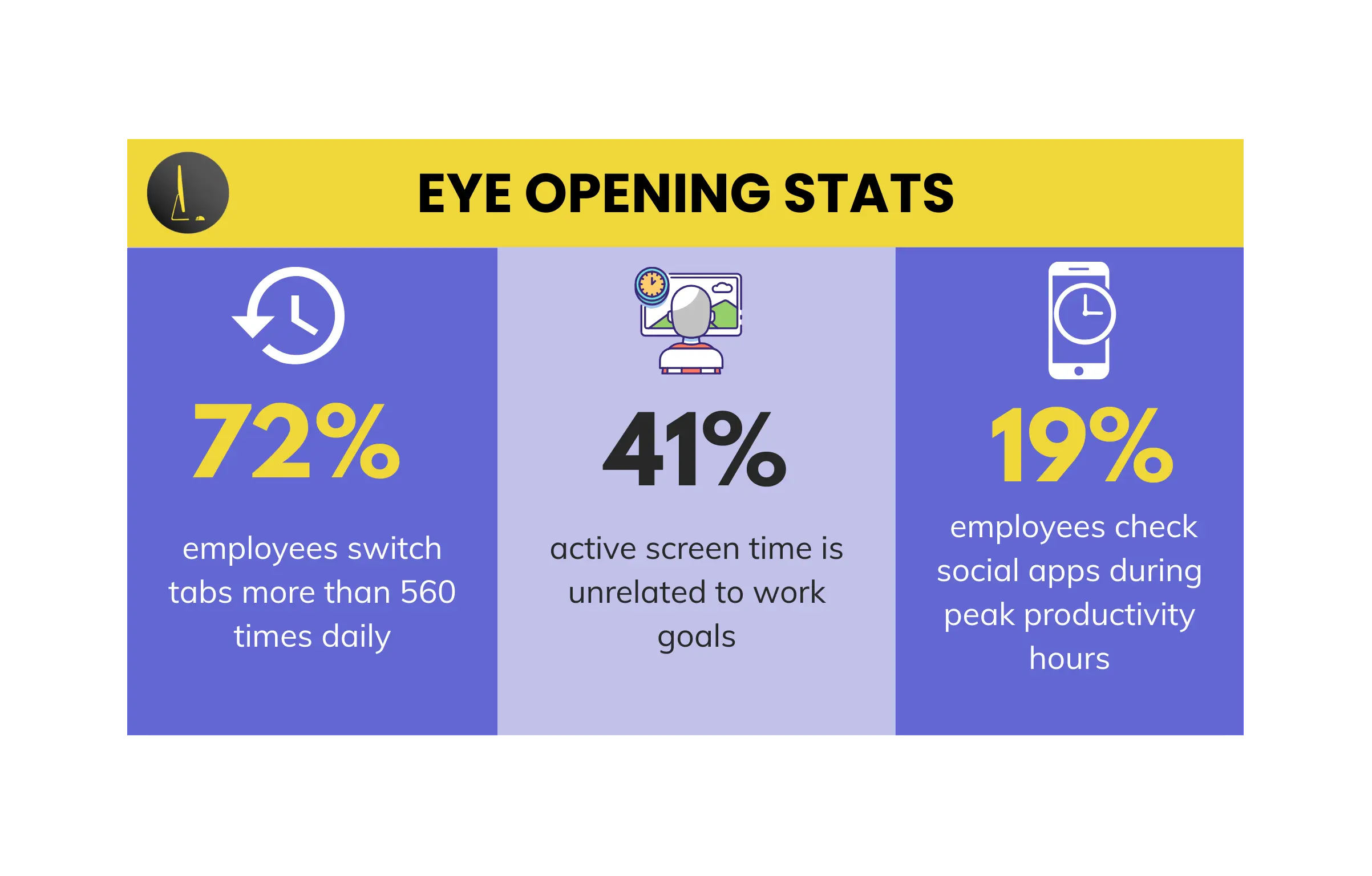
According to a Gartner Workforce Study, nearly 72% of global companies use some form of digital monitoring. Yet 44% of employees are unaware of what is being tracked.
This gap highlights a growing concern around employee monitoring transparency and why it matters more than ever.
The Core Debate: Hidden vs Visible Employee Monitoring
The modern workplace is witnessing a shift from hidden tracking to open reporting. The real comparison isn’t just tool vs tool it’s hidden vs visible employee monitoring.
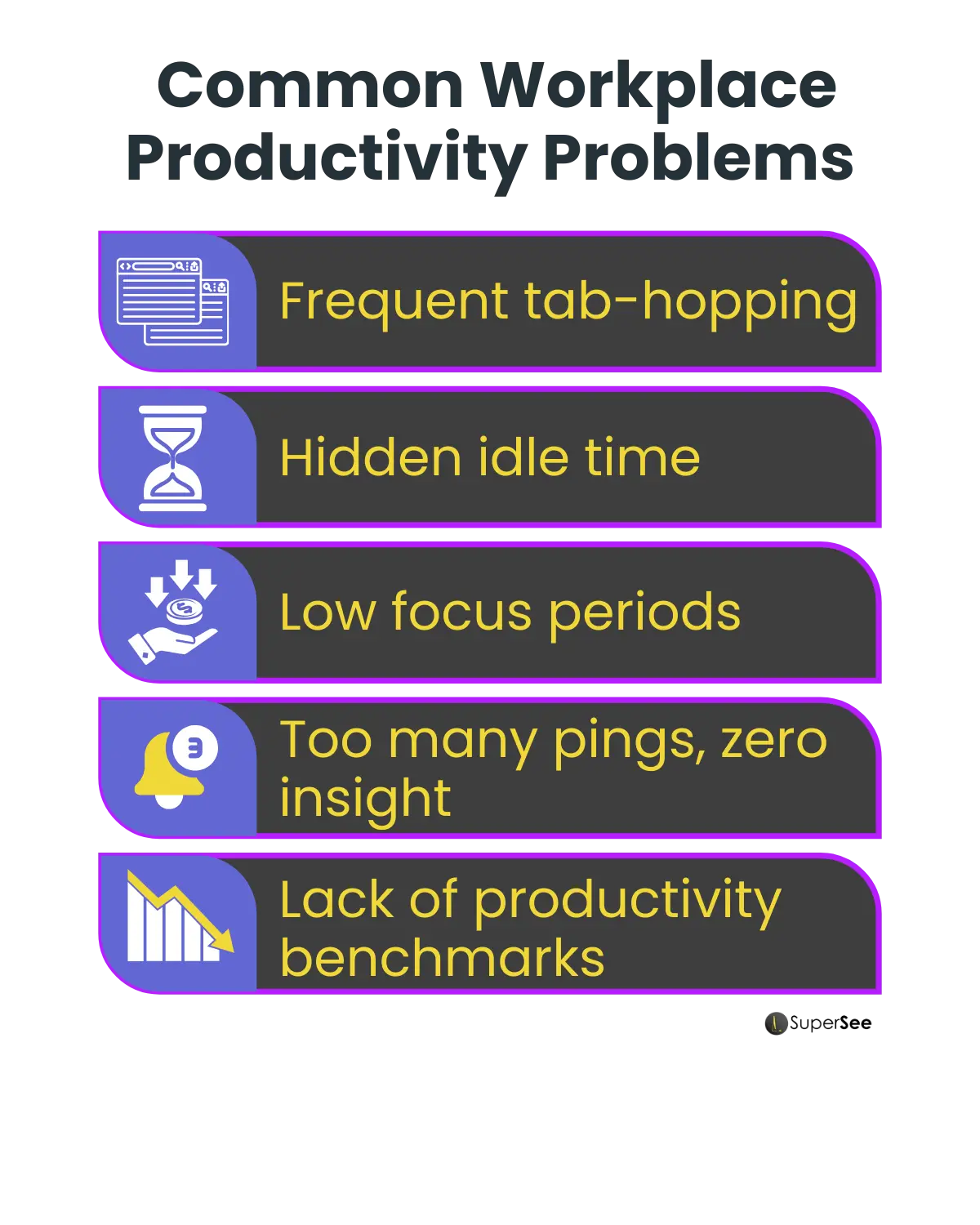
Traditional stealth monitoring systems often include:
- Tracking idle time
- Monitoring mouse movements
- Counting keystrokes
- Logging frequent activity changes
While these metrics appear measurable, they fail to capture real productivity.
Employee Monitoring Pros and Cons: What Companies Are Learning
Before choosing a system, leaders must understand the employee monitoring pros and cons.
Pros of Monitoring (When Done Right)
- Improved visibility into workflows
- Better resource allocation
- Clear productivity insights
- Compliance support
Cons of Stealth Monitoring
- Fear-driven culture
- Fake activity logs
- Misleading productivity scores
- Long working hours with low meaningful output
- Stress indicators rising by 28% in monitored environments (Harvard Digital Workforce Report)
Traditional systems incentivize “looking busy” rather than delivering value. In fact, mouse-jiggler usage has reportedly increased by 37% a direct reaction to idle-time tracking.
This demonstrates the limitations of activity-only tools.
Stealth Employee Monitoring vs. Transparent Reporting: A Side-by-Side Comparison
| Feature | Stealth Monitoring (Old Way) | Transparent Reporting (SuperSee) |
|---|---|---|
| Trust Factor | Low – Surveillance feel | High – Collaboration feel |
| Data Accuracy | Easily manipulated | Verified through contextual activity |
| Focus Metric | Mouse clicks & Idle time | Real-time work patterns & output |
| Employee Access | Hidden from the worker | Fully visible to worker |
| Impact | Higher stress & burnout | 23% higher employee satisfaction |
This employee monitoring comparison of features clearly shows that transparency delivers both cultural and operational advantages.
Why Ethical Employee Monitoring Is the Future
Research shows that 79% of employees are comfortable with monitoring if it is transparent and explained in advance.
This signals a strong shift toward ethical employee monitoring.
Modern teams demand:
- Clear productivity signals
- Contextual work patterns
- Transparent communication
- Monitoring with consent
- Insights that help, not scare, employees
This marks the evolution of employee monitoring software comparison transparency features as a deciding factor in purchasing decisions.
Companies are no longer asking “Should we monitor?”
They’re asking “How do we monitor responsibly?”
SuperSee: Built for Transparent Employee Monitoring
SuperSee is designed around one principle: employee monitoring transparency builds trust.
Instead of tracking idle seconds or mouse movements, SuperSee focuses on real work patterns through policy-controlled visibility.
How SuperSee Supports Ethical Monitoring
- Transparent tracking your team can see and understand
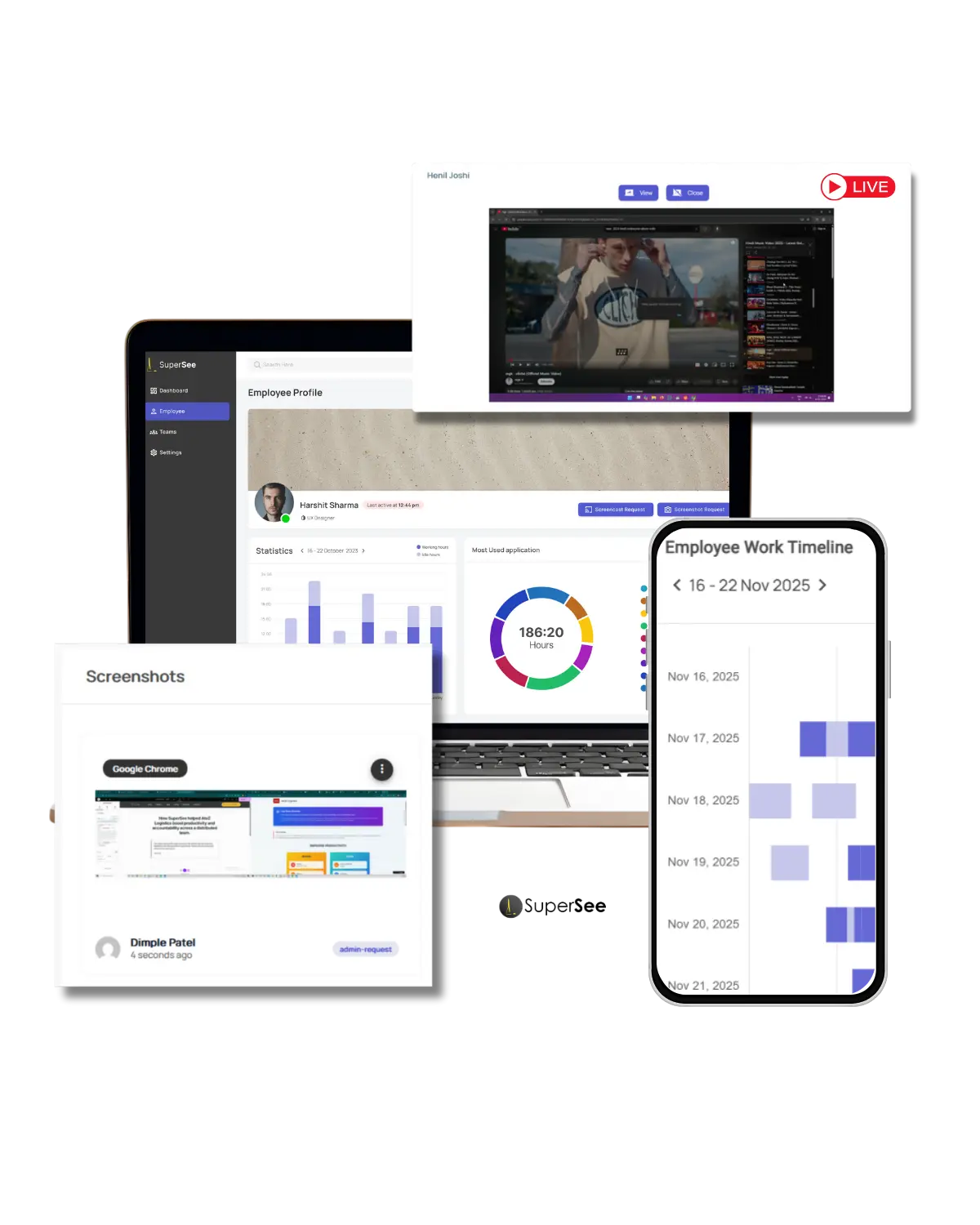
- Live screenshots and screencasts, policy-controlled, never disruptive
- Real work-pattern insights from actual activity timelines
- Live screencast only when enabled by your monitoring policy
- Automatic time tracking and one-click timesheets
- Clear, evidence-ready dashboards for coaching and compliance
- Monitoring that supports trust, transparency, and accountability
Insight: Companies using transparent monitoring systems report 23% higher employee satisfaction and 18% higher real productivity compared to traditional activity-based tools.
Value for HRs and Managers
Organizations using transparent monitoring systems report:
- 23% higher employee satisfaction
- 18% higher real productivity
- Up to 40% reduction in manual timesheet effort
SuperSee enables:
- Accurate, manipulation-resistant work data
- Fair performance evaluations
- Better workload distribution
- Smarter planning without micromanagement
This strengthens both operational efficiency and workplace culture.
Benefits for Employees
Employees benefit just as strongly. A Microsoft Future of Work study revealed that 48% of employees feel pressured to look active, not productive, when monitored with old-style trackers.
SuperSee eliminates this pressure:
- Clarity on what is being tracked
- A transparent system that reduces stress
- Freedom from fake-activity pressure
- A shift from time spent to value delivered
- Encouragement to work smarter, not longer
This is the essence of ethical employee monitoring accountability without anxiety.
Conclusion: Transparency Is Not Optional Anymore
The debate around stealth vs transparent employee monitoring is not just technical it’s cultural.
Cognizant’s move made one thing clear: the future of work requires balance, not surveillance.
- Modern companies want transparency
- Employees want fairness
- Industries want accuracy without damaging culture
The future belongs to organizations that prioritize transparent employee monitoring and embrace full employee monitoring transparency.
Ready to move beyond intrusive surveillance?
The future of work belongs to companies that value accountability without damaging culture. [Try SuperSee for Free] and experience the power of transparent reporting for your remote or hybrid team.
Unlock Advanced Employee Monitoring with SuperSee!
Start your 14-Day free trial now
Explore our features like real-time activity monitoring, customizable alerts, and detailed productivity reports.